TF-CBT
Trauma-Focused Cognitive Behavioral Therapy
Improvements in PTSD, Anxiety, Depression, and Psychological Attributes
In a sample of NC children and adolescents who were receiving Trauma-Focused Cognitive Behavioral Therapy (TF-CBT) for trauma-related symptoms, the following outcomes were achieved.
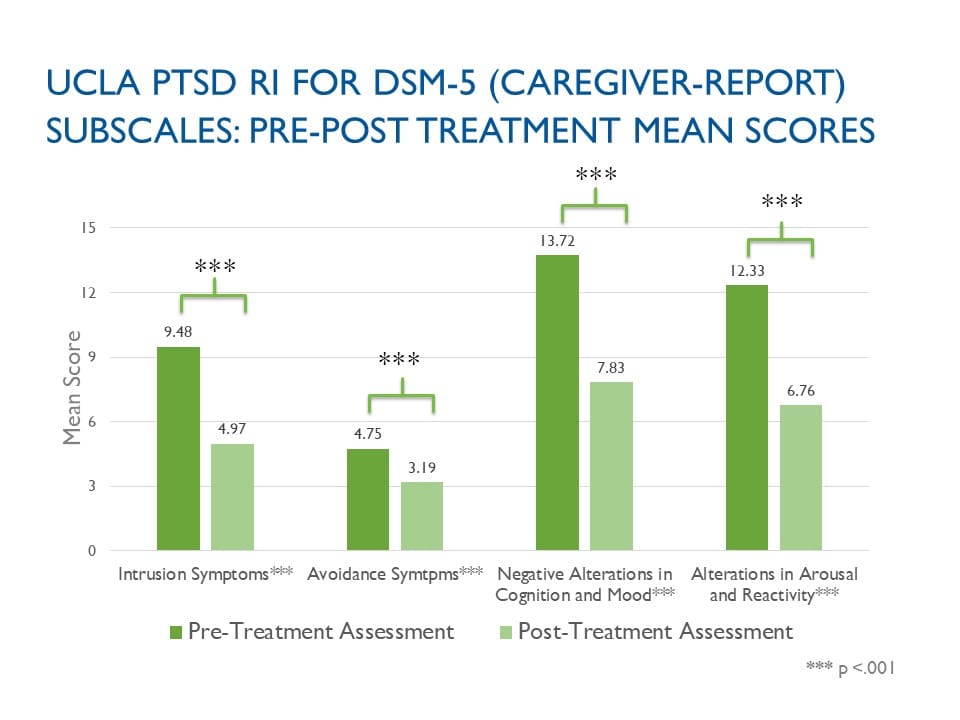
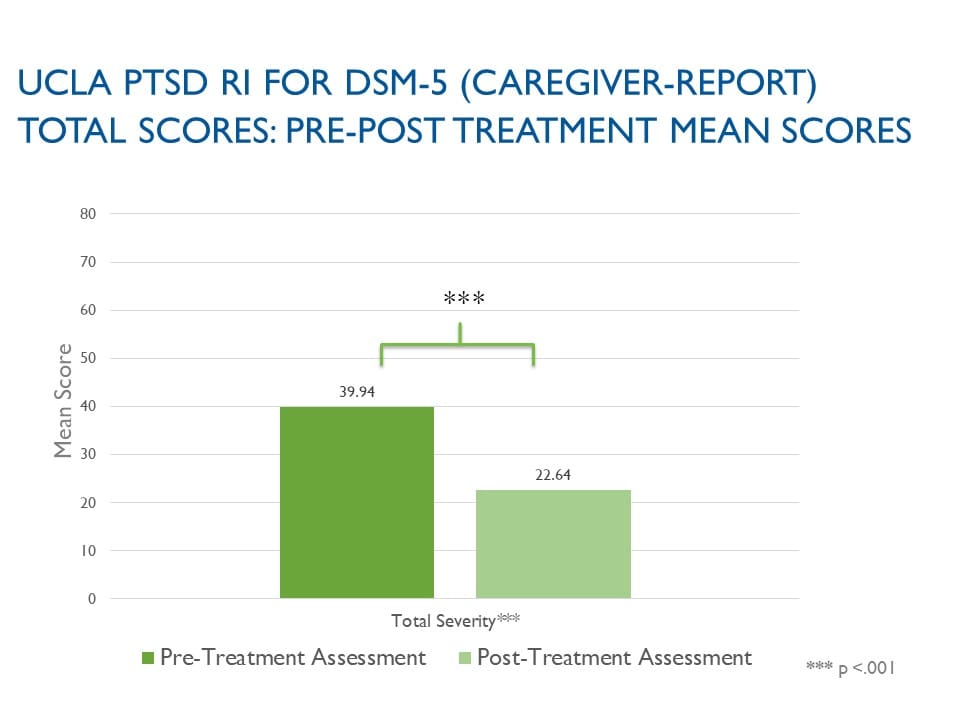
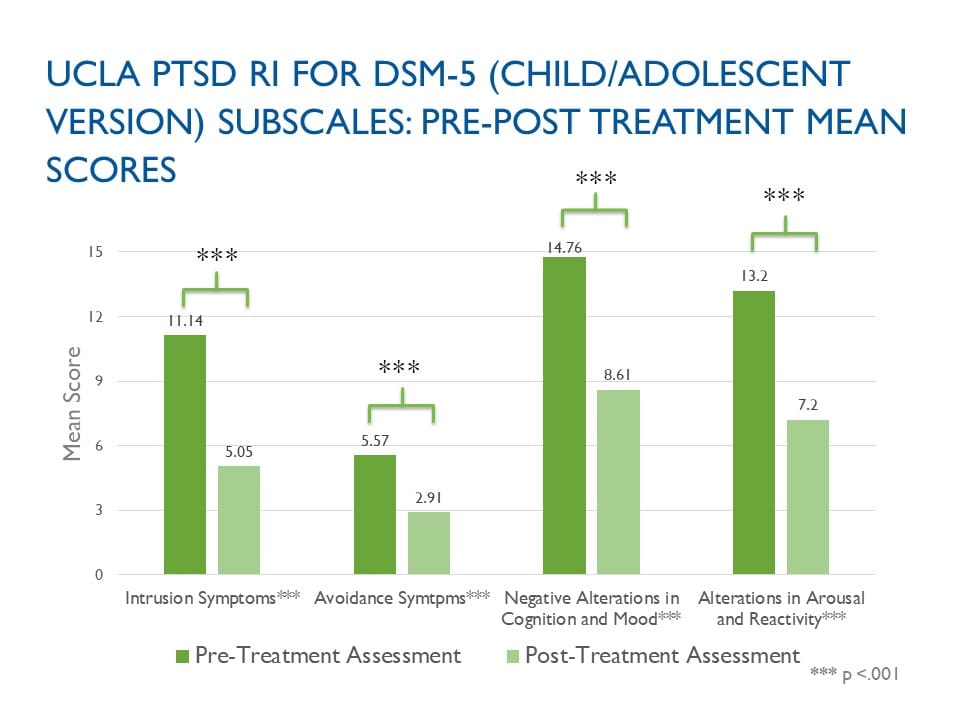
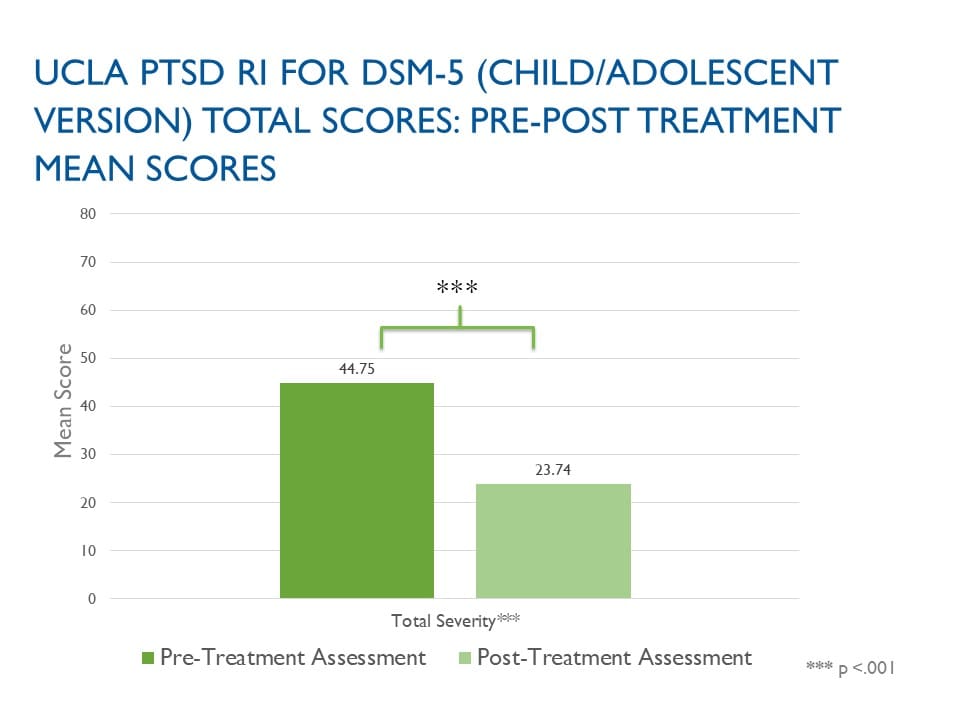
Using the UCLA PTSD Reaction Index for DSM 5 (UCLA PTSD RI – DSM 5), both children and their caregivers reported significant improvements in symptoms of PTSD (e.g., intrusion symptoms, avoidance symptoms, negative alterations in cognition and mood, and alterations in arousal and reactivity) as well as the total severity of PTSD, as seen in the following graphs.
Youth Improvement in Anxiety and Depression
Using the Revised Children’s Anxiety and Depression Scale (RCADS), youth reported significant improvements in both anxiety and depression, as seen in the following graphs.
Improvements in Youth Psychological Attributes
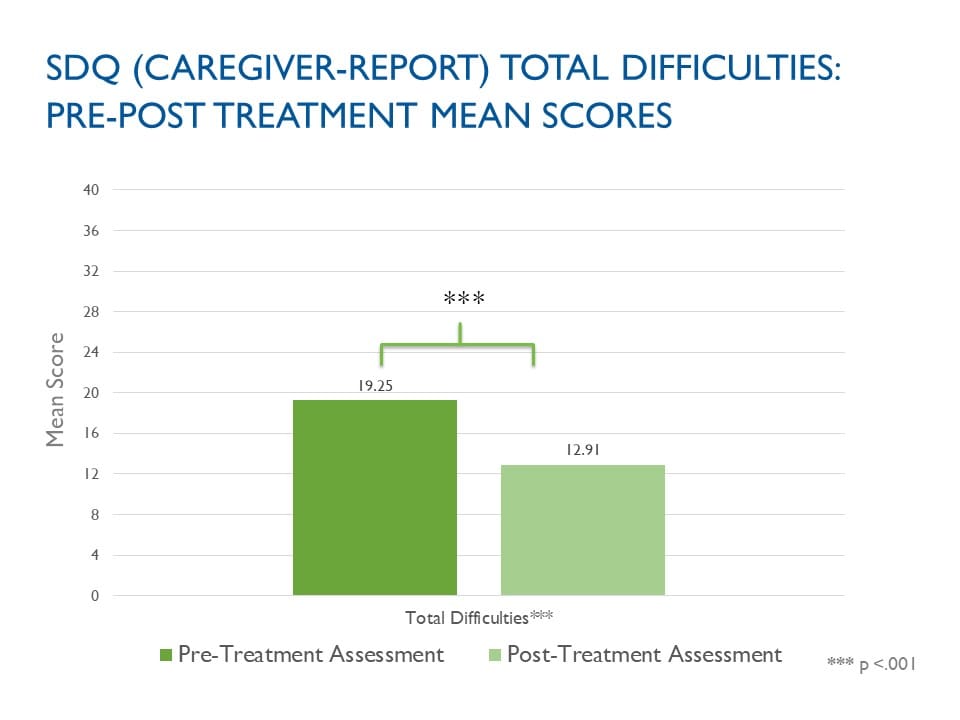
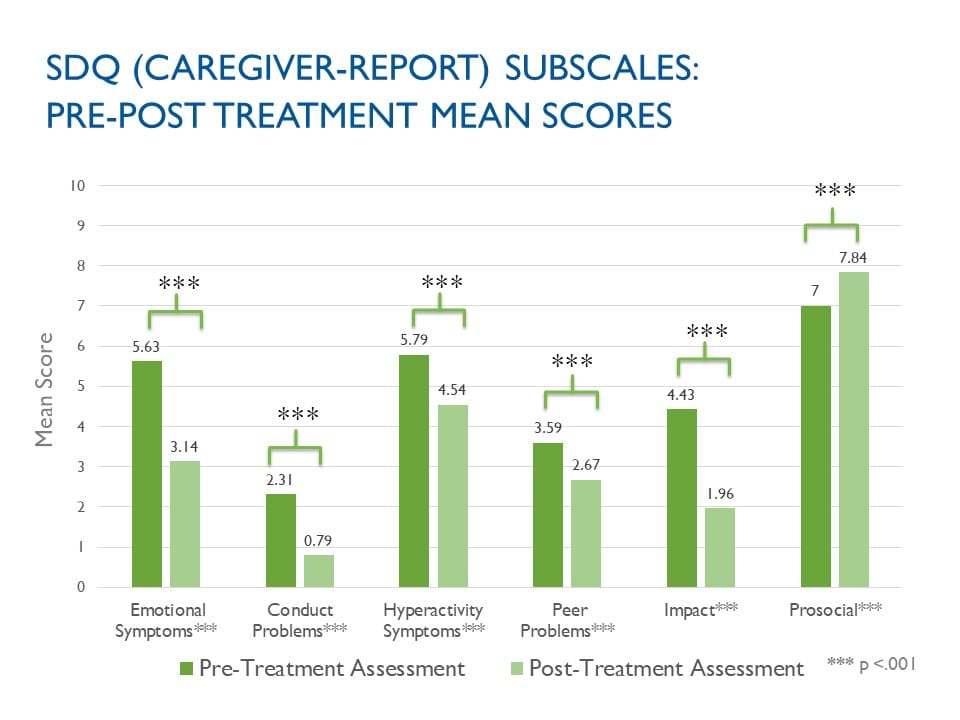
Using the Strengths and Difficulties Questionnaire (SDQ), caregivers reported that youth showed great improvements in specific psychological attributes, such as emotional problems, conduct, hyperactivity, peer problems, impact of problems, prosocial skills, and overall difficulties, as seen in the following graphs.